
Table of Contents
- The Procedure Is Over and Questions Begin
- Day 1 and the Journey Home
- Days 2 to 3 and Early Soreness
- Days 4 to 5 and Returning to Your Routine
- Days 6 to 7 and the End of the First Week
- When to Contact the Clinic or Seek Emergency Care
- What Comes After Week One
1. The Procedure Is Over and Questions Begin
The ablation is over. You are sitting up, with a small dressing on your neck. You may feel fairly comfortable. And then the questions start.
Is this tightness expected? Should I use a cold pack? When can I shower? What if the swelling gets worse?
I have written this guide so you can return to it during the first week. It describes recovery after thermal ablation of a benign thyroid nodule. Your own discharge instructions take priority because the treatment, nodule and medicines used can differ.
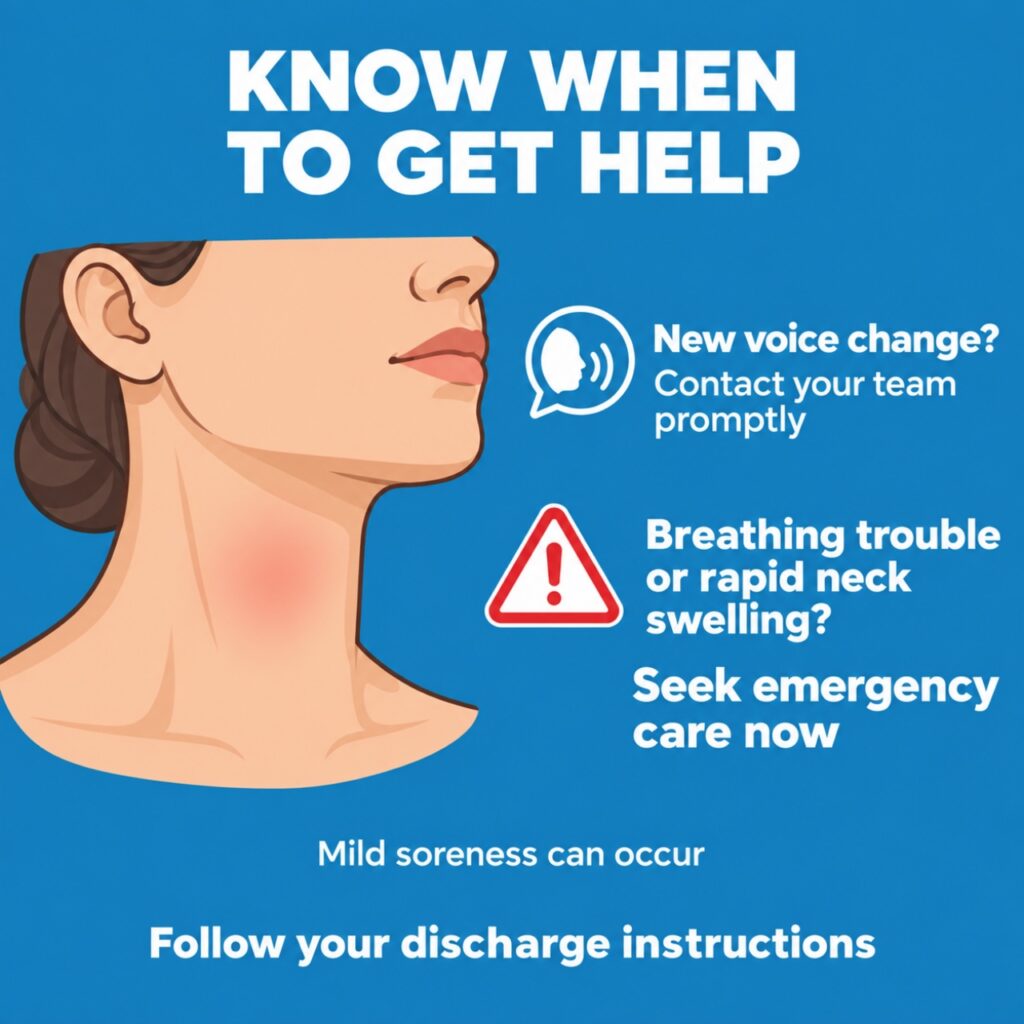
Seek emergency care now if you have difficulty breathing, rapidly increasing neck swelling, or severe difficulty swallowing, particularly if you cannot swallow your saliva. Do not wait for a clinic appointment or a WhatsApp reply. New symptoms can occur at any stage of recovery.
2. Day 1 and the Journey Home
What you may feel: Mild soreness, tenderness or a feeling of fullness around the treated area can occur. Some people have very little discomfort. The amount of pain does not tell you how well the ablation has worked.
The treated nodule and surrounding tissues can swell temporarily. Mild, stable swelling is different from swelling that is increasing quickly or affecting breathing or swallowing.
Pain relief: Take the pain medicine your doctor has advised, such as paracetamol, according to your prescription. Do not exceed the prescribed or labelled dose, and check before combining medicines that may both contain paracetamol. A cold pack wrapped in a cloth may help if your treating team recommends it. Use it gently, without pressing on your neck, and never put ice directly on the skin.
Food and drink: Once you have been cleared to eat and drink, you can usually return to your normal diet. If swallowing feels mildly uncomfortable, smaller bites and softer food may be easier. New difficulty swallowing, choking on drinks or worsening discomfort needs a call to the treating team.
Rest and transport: Rest at home and keep movement gentle. Arrange a lift home. If you received a sedative, follow the specific instructions about supervision, driving, alcohol and other activities. Avoid heavy lifting, strenuous exercise and pressure on the neck during the early recovery period.
Dressing and showering: Keep the puncture site clean and follow the dressing instructions you were given. Removal and showering advice varies between centres and dressing types. Do not assume that removing the dressing means you can soak the area or go swimming.
Sleeping: Choose a comfortable position that does not put pressure on the treated area. If lying down makes breathing or swallowing difficult, seek medical advice rather than trying to manage it by changing pillows.
3. Days 2 to 3 and Early Soreness
You may still notice tenderness, mild swelling or a small bruise at the puncture site. Symptoms do not follow an exact timetable. The first few days can be the most uncomfortable, and some people take longer than others to settle.
Watch how you are doing overall. Mild discomfort that is manageable with the advised pain relief can be part of recovery. Increasing pain, progressive swelling or a change in your voice should not be dismissed because you are only on day two.
What to do: Continue the advised pain relief when needed. Keep eating and drinking as tolerated, and take short, gentle walks. Follow the instructions for your dressing and washing. A bruise may take longer than a week to fade completely.
What to avoid: Do not massage the nodule or repeatedly press it to see whether it has shrunk. Avoid forceful neck movements, tight pressure over the treatment site and exercise that strains the neck. Check with the clinic before applying heat or any cream to the puncture site.
I would rather you contact us about an unexpected symptom than wait for it to fit a timetable. Contact details and the symptoms that need urgent action are in section six.
4. Days 4 to 5 and Returning to Your Routine
You may now be feeling more comfortable and thinking about work, cooking, household tasks or a longer walk. Some people return to light activities earlier; others still need extra rest. Mild residual tenderness can persist, but symptoms that are worsening need review.
Activity: Return gradually, according to comfort and your discharge advice. Desk work and gentle walking may be manageable before gym sessions or heavy household work. There is no need to test your recovery with a strenuous workout.
Driving: Resume only when any restriction after sedation has passed, you are not impaired by medicines, and you can turn your head and control the vehicle comfortably. Follow the instructions from your treating team.
The puncture site: It should be becoming less tender. The speed at which a small mark or bruise fades varies. Spreading redness, warmth, discharge or increasing tenderness should be checked.
Published aftercare instructions vary in their restrictions on dressings, washing and exertion. Your clinic’s written plan should give you the details for your procedure.
5. Days 6 to 7 and the End of the First Week
By the end of the week, you may be close to your usual routine. You might also still have some tenderness or bruising. Recovery is not a pass-or-fail test on day seven.
Resume strenuous exercise, swimming, yoga that places pressure on the neck, and travel according to your symptoms and the advice you were given. If you are planning a journey away from medical care, discuss it with the treating team. A calendar date alone is not clearance for every activity.
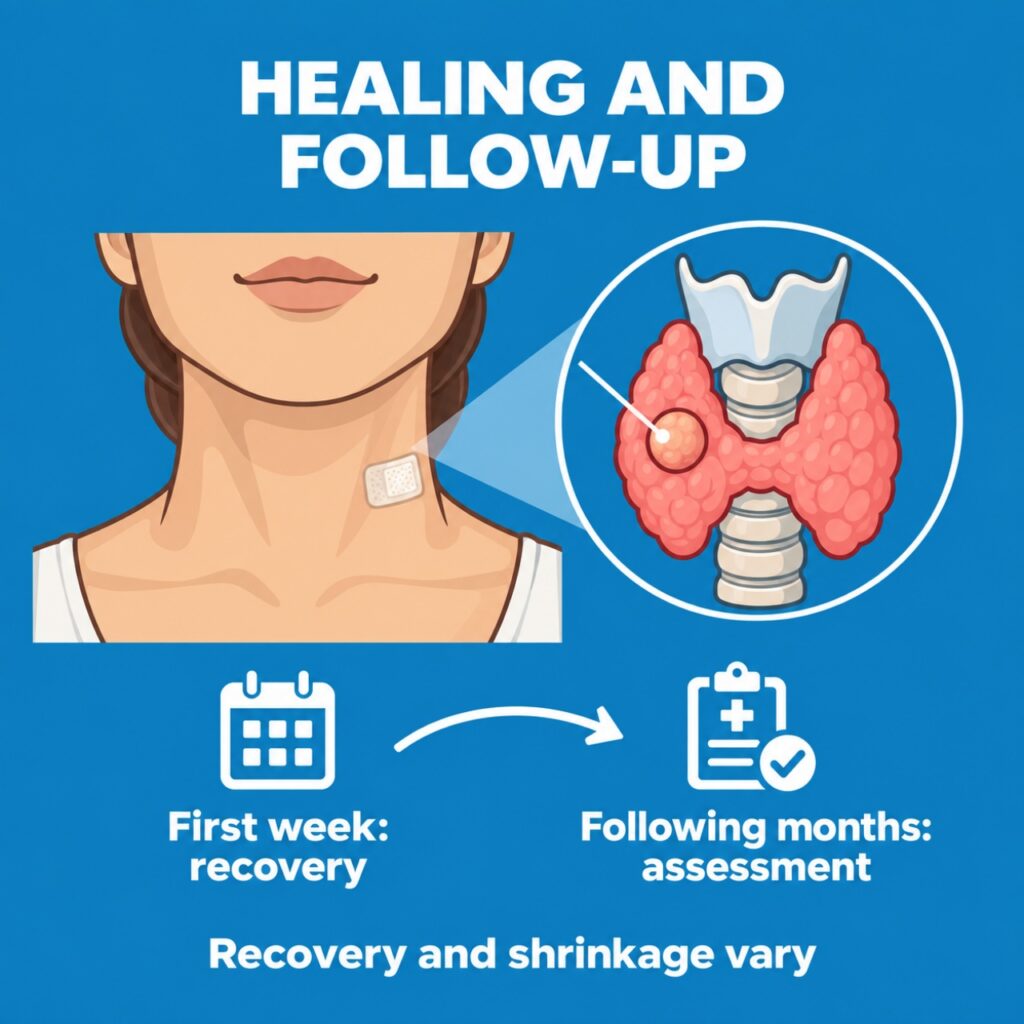
You may not yet see a smaller neck lump. Ablation treats tissue inside the nodule; the body then gradually clears the treated tissue. Ultrasound is used to measure the response over time, rather than judging the result from the first week’s appearance. For related reading, browse our patient education articles.
6. When to Contact the Clinic or Seek Emergency Care
Seek emergency care immediately for:
- Difficulty breathing or noisy breathing.
- Rapidly increasing neck swelling, especially with tightness.
- Severe or worsening swallowing difficulty, particularly inability to swallow saliva.
- Heavy or persistent bleeding, fainting, or rapidly worsening symptoms.
Do not wait for a scheduled follow-up or a response to a message. Go to the nearest emergency department or call your local emergency service. Take your discharge information if it is readily available.
Contact the treating team promptly for:
- Any new hoarseness or noticeable change in your voice, or coughing and choking when drinking. Do not wait until the next day to report it.
- Fever, particularly with worsening neck pain, swelling, redness or feeling unwell.
- Swelling or pain that is increasing, or pain that is not controlled by the prescribed medicine.
- Spreading redness, warmth, discharge or continuing bleeding at the puncture site.
- Symptoms that make eating and drinking difficult, or any recovery concern that does not match your discharge instructions.
These symptoms need assessment when they occur; there is no requirement to wait for day three or for a fever to last 24 hours. If symptoms are severe, worsening quickly, or you cannot obtain prompt clinical advice, seek urgent local care.
What can be part of routine recovery: Mild soreness that responds to the advised pain relief, a small stable bruise and mild swelling that settles. The severity and direction of change matter. If you are uncertain whether a symptom is mild or expected, contact us.
7. What Comes After Week One
The first week is mainly about recovering from the procedure. The nodule’s response is assessed over the following months using your symptoms and ultrasound measurements. Thyroid function may also need checking, particularly if the nodule was overactive or you already had a thyroid condition.
Follow-up schedules vary. An initial review or scan may be arranged within the first one to three months, followed by later assessments. Keep the dates given by your treating team, and seek earlier review if symptoms develop.
The amount and speed of shrinkage vary, and some nodules need another treatment. A percentage reduction cannot be promised for your three-month scan. Continuing follow-up also helps detect later regrowth.
New swelling or pain after initial improvement also needs assessment, including if it occurs weeks later. Rare delayed complications can occur.
For more information, browse our patient education articles.
For post-ablation concerns or questions:
Phone / WhatsApp: +91-9211978100
Email: [email protected]
Use the emergency contact arrangements on your discharge sheet for urgent concerns. Email and WhatsApp should not delay emergency care.
My advice for this week is to keep the recovery plan simple: take the medicines as advised, increase activity gradually, and ask for help when a symptom is new or worsening.