
Your thyroid nodule may not need surgery.
For selected benign thyroid nodules, ultrasound-guided RFA or MWA can target the nodule through a needle-sized entry—while aiming to preserve the rest of your thyroid.
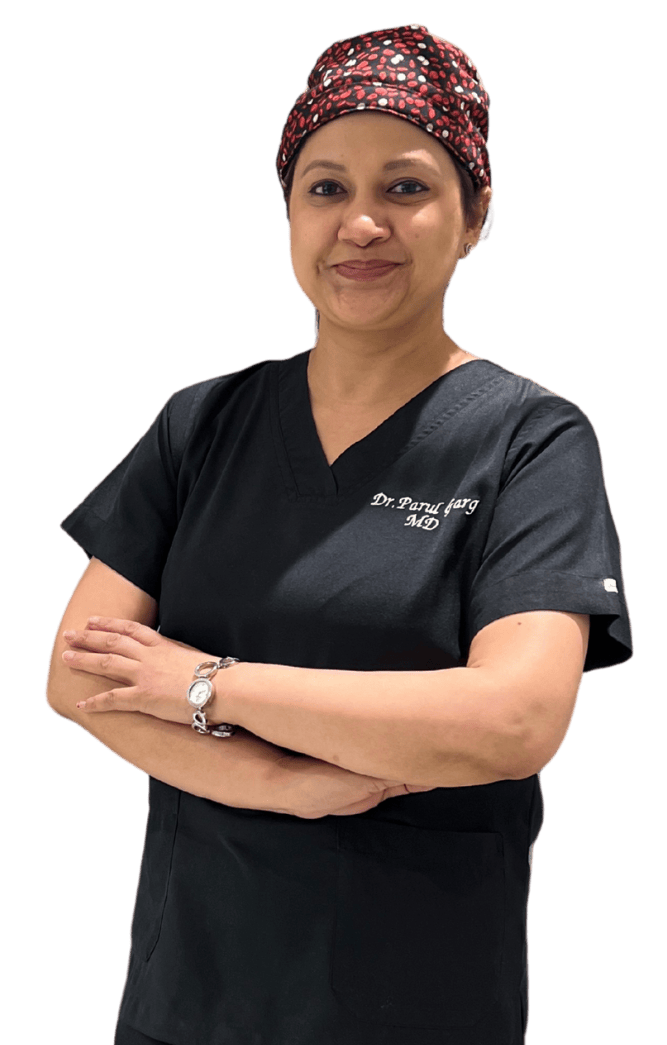
Thyroid Nodule Ablation Specialist
Could ablation be right for your nodule?
Ablation is considered after reviewing the nodule's ultrasound features, biopsy result when indicated, size, location, symptoms and your overall thyroid health.
- Your nodule has been confirmed benign, or you are completing the required evaluation.
- It causes neck pressure, swallowing discomfort, visible swelling or cosmetic concern.
- You want to understand non-surgical options before deciding on treatment.
- You have been told the nodule is large and want a specialist second opinion.
Important: not every thyroid nodule should be ablated. Suspicious or malignant nodules and some thyroid conditions may need a different treatment pathway.
Ask Dr. Parul Garg's team to call you
Share your details below. Please do not include highly sensitive medical information in the message box.
Prefer to speak now? Call +91 98186 97611
A smaller procedure. A gland-preserving goal.
Thermal ablation uses a fine probe and controlled heat to treat selected benign nodules under continuous ultrasound guidance.
No cut or stitches
The probe enters through a tiny skin puncture rather than a surgical neck incision.
Local anaesthesia
The procedure is generally performed while you are awake, with the treatment area numbed.
Preserves healthy tissue
Treatment is planned around the nodule to help preserve surrounding thyroid tissue.
Shorter recovery
Many patients go home the same day and return to routine activity relatively quickly.
Benefits, procedure time, number of sessions, recovery and shrinkage vary by nodule and patient. Your specialist will explain realistic expectations and risks.
From report review to follow-up
Evaluate
Ultrasound, thyroid tests, symptoms and prior reports are reviewed.
Confirm suitability
FNAC or biopsy is considered when indicated to confirm the diagnosis.
Treat precisely
RFA or MWA is usually performed under real-time ultrasound guidance and local anaesthesia.
Track shrinkage
Follow-up ultrasound monitors gradual reduction over the following months.
Your questions, organised by where you are in the journey
Start with the basics, understand your reports, see how treatment works, or explore large and complex nodules.
18 practical videos · choose a topic and watch at your paceShowing all 18 videos
Thyroid Ablation: The 4-Minute Guide
Thyroid Ablation: Common Questions
Ablation vs Surgery for Benign Nodules
Ultrasound & FNAC: How Nodules Are Assessed
Benign vs Cancerous Thyroid Nodules
Getting a Thyroid Nodule Examined
Why Nodule Blood Flow Matters
How Thermal Ablation Treats a Nodule
Mixed Nodule: Drainage + Ablation
Shrinkage Results & Timelines
When Will the Nodule Shrink?
Can a Nodule Be Too Big for Ablation?
Ultrasound-Guided Thyroid Ablation Case
Male Patient: Ablation Treatment Case
Why Earlier Evaluation Can Matter
Thyroid Nodules & Treatment Options
Goiter: Causes, Symptoms & Treatment
Thyroid Nodule Ablation in India: The Complete Conversation
Success rates, candidacy, timelines, one versus multiple sessions, safety, recovery and common patient questions.
What patients ask before a consultation
A report review is the quickest way to get an answer specific to your nodule.
Who may be considered for thyroid nodule ablation?
Does ablation make the nodule disappear immediately?
Will I need more than one session?
Is a biopsy required before ablation?
How quickly can I return to normal activity?
What does thyroid ablation cost?
Before you decide on surgery, understand every suitable option.
Ask for a specialist review of your thyroid ultrasound and reports. The next step is a personalised assessment—not a one-size-fits-all promise.
This page is for patient education and does not replace an in-person medical consultation. Treatment eligibility, benefits, risks, alternatives, recovery, costs and results vary. Medical images and biopsy findings must be reviewed by a qualified clinician. In an emergency, contact local emergency services.